“World War or a War for Survival?”
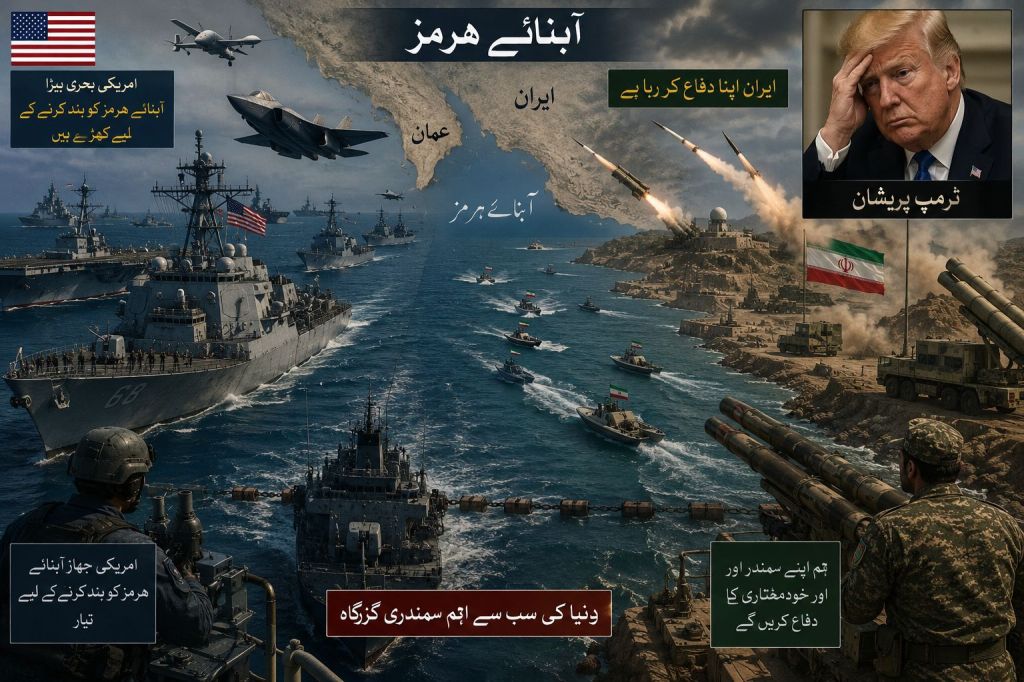
World War III and the Role of Regional Powers
If this conflict turns into a large-scale global war, the role of major countries could be as follows:
China and Russia: Both countries are strategic partners of Iran. After the Ukraine war, Russia has shown interest in strengthening Iran’s defense system, while China depends on Iran and the Gulf countries for its energy (oil) needs. Rather than engaging directly in war, both are likely to try to counter the United States through diplomatic and defensive support, including the supply of weapons.
Pakistan and Afghanistan: For Pakistan, this situation would be like “a river of fire,” as it would have to maintain a balance between the United States and Iran. Afghanistan (under the Taliban government) would most likely avoid becoming part of any anti-Iran American campaign and would instead try to keep its territory neutral.
For Pakistan, this war would be a major test:
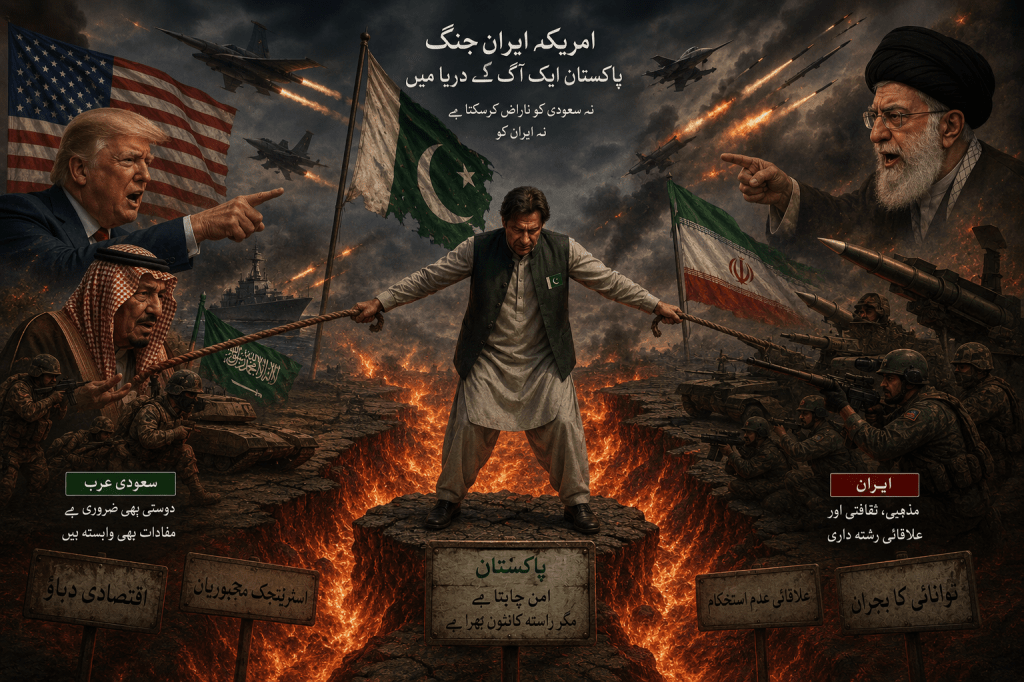
Saudi Arabia and Iran Balance: Pakistan would have to maintain a careful balance between its brotherly Islamic neighbor (Iran) and its key economic supporters (Saudi Arabia and the United States).
CPEC (China-Pakistan Economic Corridor): If war breaks out in the Strait of Hormuz, the importance of Gwadar Port could increase significantly. However, instability in the region could also severely damage Pakistan’s economy.
Netanyahu’s objectives: Personal survival or religious ideology?
There are three main perspectives regarding Israeli Prime Minister Benjamin Netanyahu, which you have mentioned:
Personal political survival: Netanyahu is facing serious corruption cases. Many observers believe that he may be prolonging the war to preserve his government, as ending the war could lead to him facing the courts.
Ideological and religious aspect: Hardline religious circles in Israel believe in the idea of a “Greater Israel” and the coming of the “Messiah.” Netanyahu is sometimes seen as taking actions to gain the support of these groups, and some people link such developments to religious prophecies or interpret them in a broader apocalyptic or end-times narrative.
Ideological and religious aspect:
Hardline religious circles in Israel believe in the concept of a “Greater Israel” and the coming of the “Messiah.” Netanyahu is often seen as taking actions to secure the support of these groups. Some people link these developments to religious prophecies or interpret them within a broader end-times framework.
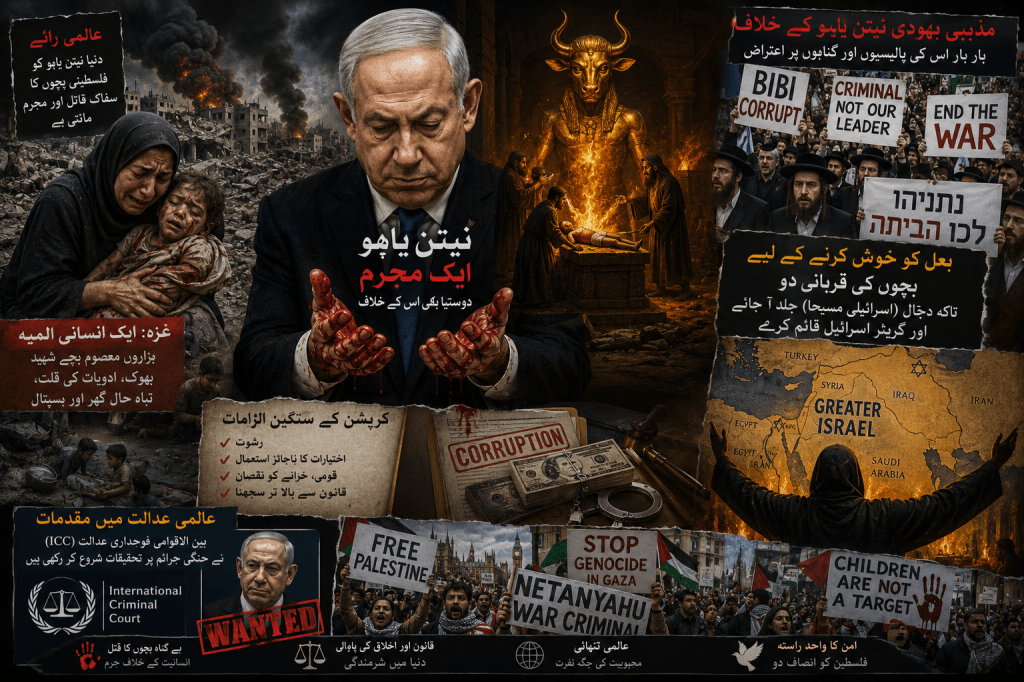
“Greater Israel” and Netanyahu’s religious agenda: Hardline ministers in Netanyahu’s cabinet (such as Ben-Gvir and Smotrich) openly speak about a “holy war.” For them, confrontation with Iran is not merely political but also a religious duty aimed at establishing Israel’s full dominance in the region.
Economic crisis and food shortages
Oil prices: If the Strait of Hormuz is closed, oil prices could exceed $150 per barrel, leading to a global surge in inflation.
Food shortages: Disruption of international trade would break global supply chains, potentially creating famine-like conditions in poorer countries.
Modern wars are not fought only with missiles. If Iran or Israel were to launch cyberattacks on each other’s power grids or supply chain systems, the distribution of food could be halted. This could lead to a food crisis in cities within just a few days.
“Future of Iran: Defense or Destruction?”
Iran has, over the past several decades, prepared itself for “asymmetric warfare.”
Defensive strength: Iran has one of the most advanced drone and missile programs in the world. It also has the ability to significantly damage Israeli and U.S. interests through proxy groups such as Hezbollah and the Houthis.
Destruction risk:
In the event of a direct attack, Iran’s infrastructure could suffer severe damage. However, fully subduing Iran would prove extremely difficult for any global power.
Conclusion :
This war would not be a victory for any side, but rather a defeat for humanity. Netanyahu’s personal interests and America’s global dominance have brought the Middle East to a point where the path back is extremely difficult.
Zarsheedkhan@gmail.com
Please give your openione
 zarsheedkhan22-anwgc
Leave a comment